
SEPA Payments in Euro: Complete Guide + What Paysera’s Access to the ECB’s T2 System Means


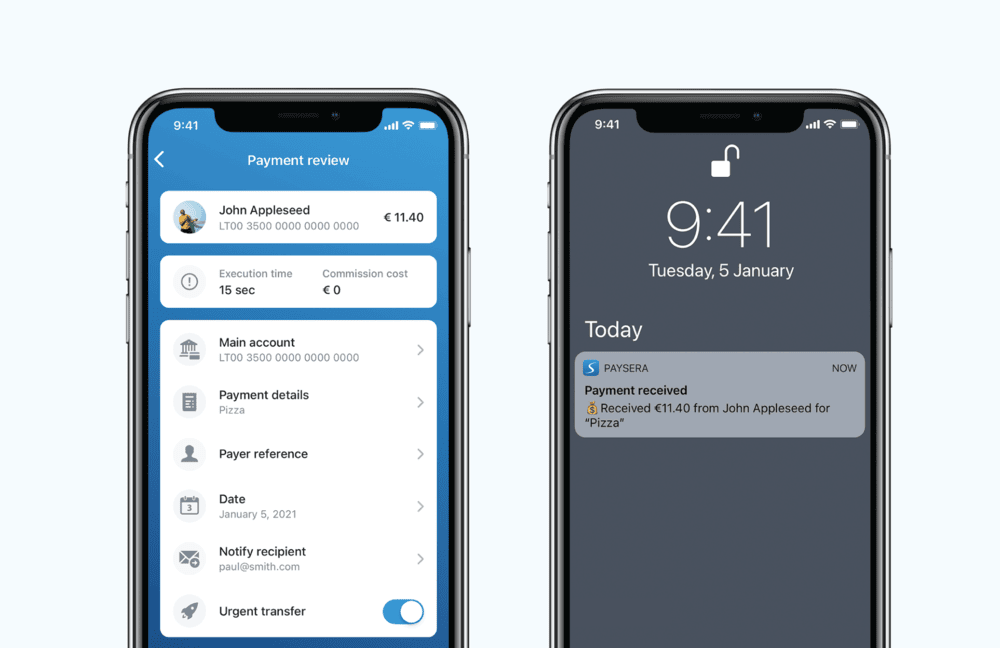
In short: SEPA (Single Euro Payments Area) is the European framework that standardizes euro (EUR) payments across participating countries and territories. If you send money in EUR to an IBAN within the SEPA area, you typically use a SEPA transfer. Depending on the provider and the initiation time (cut-off), standard transfers usually arrive within 1 business day, while SEPA Instant (if available at both institutions) can arrive in a few seconds.
The SEPA system has simplified euro transfers across Europe, offering a standardized way to send money to other countries and territories within the SEPA area. It is particularly useful when paying international suppliers, sending money to family, or paying for cross-border services in EUR.
A relevant development in 2025–2026: with the entry into force of EU Regulation 2024/886, payment institutions can now connect directly to the T2 system of the European Central Bank — the settlement infrastructure previously accessible only to banks. Paysera is the first electronic money institution in Europe to obtain this direct access, enabling real-time settlement without banking intermediaries.
Moreover, direct access means that Paysera operates with a central bank account (via the Bank of Lithuania) and processes payments in central bank money — the safest form of financial settlement. In practice, Paysera has moved from a model dependent on partner banks to one where it manages payment flows directly within the Eurosystem, using the same infrastructure as major commercial banks.
For more details on available options, you can visit Paysera’s page on international transfers.
What is SEPA and what it means for euro transfers
What does SEPA mean?
SEPA (Single Euro Payments Area) is a unified euro payments zone designed so that EUR transfers are processed under common standards. In practice, SEPA aims to make euro transfers across participating countries as simple, predictable, and easy to initiate as possible, using standardized information (primarily the IBAN).
For a detailed explanation, see Paysera’s article: What is SEPA.
What information do you usually need for a SEPA transfer?
- Recipient’s IBAN (essential)
- Recipient’s name (depending on the channel and provider)
- Additional details only if required (e.g. address), depending on internal rules and compliance
SEPA transfer: basic conditions for correct processing
What are the criteria for a SEPA transfer?
For a payment to qualify as a SEPA transfer, it must meet a few simple rules:
- Currency is EUR: the transfer is made in euro. If you start from a different currency account, a currency conversion may apply according to your provider’s policy.
- Recipient within SEPA area: the destination account must be in a country or territory included in the SEPA area (depending on the scheme).
- Shared charges (SHA) model: typically, each party pays the fees of their own provider. Exact costs depend on your provider and pricing plan.
If you send money outside the SEPA area or in other currencies, you will typically use other types of international transfers (with potentially higher variability in cost and processing time).
How long does a SEPA transfer take and what is SEPA Instant
Processing time for SEPA transfers
Typically, SEPA standard transfers are processed on business days, and delivery time depends on the initiation time (cut-off) and the operational schedule of the institutions involved. In many cases, standard transfers arrive within 1 business day, but transactions initiated after the cut-off time or around holidays may be processed on the next business day.
|
Transfer type |
Processing time |
Availability |
|---|---|---|
|
SEPA Standard |
Usually 1 business day (depending on cut-off) |
Business days |
|
SEPA Instant |
Typically within seconds |
24/7/365 (if available at both parties) |
SEPA Instant (SCT Inst) is the fast transfer option: funds arrive within seconds, regardless of time or day. Important: it must be available at both the sender’s and the recipient’s institution.
Limits for SEPA Instant: there is no single universal limit across all providers; the scheme defines standard thresholds (typically in the tens of thousands of euros), while individual providers may set their own limits per transaction or per day based on risk and internal policies.
What direct access to T2 (ECB) means for transfer speed
The speed of instant transfers also depends on the provider’s technical infrastructure. Institutions that process payments directly through the T2 system of the European Central Bank — the main euro settlement infrastructure, through which over €2 trillion flows daily — can execute and confirm transactions in real time without relying on intermediary banks.
More specifically, T2 is the system through which financial institutions settle payments between each other in central bank money, with immediate finality. Direct access eliminates the need for correspondent banks or multi-step settlement chains.
In the traditional model, a payment institution depends on one or more partner banks to access settlement infrastructure, which can introduce delays, additional costs, and operational failure points. With direct T2 access, Paysera removes this chain and processes payments directly within the Eurosystem, reducing latency and increasing execution predictability.
This direct connection to the Eurosystem was previously available only to commercial and central banks, national treasuries, and financial market infrastructures. EU Regulation 2024/886 (effective October 2025) opened access to non-bank payment institutions, increasing competition and democratizing European payment infrastructure.
Paysera is the first electronic money institution in Europe to obtain direct participant status in T2, following a rigorous evaluation by the ECB and the Bank of Lithuania. In practical terms, this means Paysera manages its own liquidity and settlement positions directly within T2, without relying on partner banks, giving it full control over payment execution.
From a strategic perspective, this positions Paysera not just as a payment service provider, but as a direct participant in European financial infrastructure, operating at the same level as banks connected to the Eurosystem.
Countries in the SEPA zone
Currently, the SEPA zone includes 41 countries (according to the official EPC list, updated May 2025, with entries effective October 2025).
|
# |
Country / territory |
Category |
|---|---|---|
|
1 |
Austria |
EU |
|
2 |
Belgium |
EU |
|
3 |
Bulgaria |
EU |
|
4 |
Croatia |
EU |
|
5 |
Cyprus |
EU |
|
6 |
Czech Republic |
EU |
|
7 |
Denmark |
EU |
|
8 |
Estonia |
EU |
|
9 |
Finland |
EU |
|
10 |
France |
EU |
|
11 |
Germany |
EU |
|
12 |
Greece |
EU |
|
13 |
Hungary |
EU |
|
14 |
Ireland |
EU |
|
15 |
Italy |
EU |
|
16 |
Latvia |
EU |
|
17 |
Lithuania |
EU |
|
18 |
Luxembourg |
EU |
|
19 |
Malta |
EU |
|
20 |
Netherlands |
EU |
|
21 |
Poland |
EU |
|
22 |
Portugal |
EU |
|
23 |
Romania |
EU |
|
24 |
Slovakia |
EU |
|
25 |
Slovenia |
EU |
|
26 |
Spain |
EU |
|
27 |
Sweden |
EU |
|
28 |
Iceland |
EFTA/EEA |
|
29 |
Liechtenstein |
EFTA/EEA |
|
30 |
Norway |
EFTA/EEA |
|
31 |
Switzerland |
EFTA (non-EEA) |
|
32 |
United Kingdom |
Non-EU (remains in SEPA post-Brexit) |
|
33 |
Andorra |
Microstate |
|
34 |
Monaco |
Microstate |
|
35 |
San Marino |
Microstate |
|
36 |
Vatican City State / Holy See |
Microstate |
|
37 |
Albania |
EU candidate (in SEPA since Oct 2025) |
|
38 |
Moldova |
EU candidate (in SEPA since Oct 2025) |
|
39 |
Montenegro |
EU candidate (in SEPA since Oct 2025) |
|
40 |
North Macedonia |
EU candidate (in SEPA since Oct 2025) |
|
41 |
Serbia |
EU candidate (in SEPA since May 2025; ORD: May 2026) |
Note: Guernsey, Jersey, and the Isle of Man (UK Crown Dependencies), as well as certain French territories (e.g. Mayotte, Saint-Pierre-et-Miquelon), participate in SEPA schemes through the United Kingdom and France respectively — not as independent members. Transfers to/from the UK may require the bank’s BIC and the full address of the sender, unlike intra-EEA transfers where IBAN is typically sufficient.
For the official, up-to-date list, refer to the European Payments Council document: EPC List of SEPA Scheme Countries.
SEPA Direct Debit: automatic payments for recurring billing
How does SEPA Direct Debit work?
SEPA Direct Debit allows a service provider to collect recurring payments automatically from your account, based on a pre-authorized mandate. It is useful for subscriptions and recurring bills, reducing the risk of missed payments.
Control and protection for the payer
- Revocable mandate: you can stop debits by revoking the mandate, according to your provider’s and institution’s terms.
- Refund rights: depending on the scheme (e.g. Core vs B2B) and situation (authorized vs unauthorized), different timelines and rules apply for refunds. Practical recommendation: review mandate terms and provider policies before activation.
SEPA vs SWIFT: when to use each (simple and practical)
- Use SEPA when sending EUR to an IBAN within the SEPA area — typically the simplest and most predictable option.
- Use traditional international transfers (e.g. SWIFT) when sending outside SEPA or in currencies other than EUR.
Fees and costs for SEPA payments
Why can costs vary?
The cost of a SEPA transfer can vary depending on the provider, account type or plan, channel used (online vs branch), and service type (standard vs instant). If you start from a non-euro account, consider potential currency conversion costs.
The elimination of correspondent banks and direct access to settlement infrastructure can, in practice, contribute to lower operational costs and more transparent fee structures for users.
For transparency, see: fees for euro transfers.
Frequently asked questions about SEPA payments
What information do I need to make a SEPA transfer?
Typically, the recipient’s IBAN and name. Additional details (e.g. address or BIC) may be required depending on destination, channel, and compliance policies.
Can I cancel a SEPA transfer after initiating it?
It depends on the processing stage. If not yet processed, cancellation may be possible; for instant transfers, cancellation is generally very difficult due to speed.
Can I make SEPA transfers on weekends?
You can initiate transfers anytime via digital channels, but SEPA standard typically follows business days and cut-off times. SEPA Instant, if available, works 24/7/365.
What happens if I enter the wrong IBAN?
If the IBAN is invalid, the payment may be rejected. If it is valid but belongs to another recipient, the transfer may go through, and recovery can be difficult. Always double-check details before confirming.
Conclusion: how to use SEPA efficiently with Paysera
If you make payments in EUR within the SEPA area, SEPA transfers are one of the most efficient options: standardized, easy to initiate, and often fast. For efficiency, use digital channels, consider cut-off times, and check SEPA Instant availability when speed matters.
Paysera adds an extra layer compared to typical providers: as the first electronic money institution in Europe with direct access to T2 — the ECB’s settlement system — payments are processed in real time, directly within the Eurosystem, without intermediary banks. This model enables direct execution control, a more robust infrastructure, and higher payment processing capacity.
In 2025, Paysera processed 27.6 million transfers totaling €23.3 billion, of which 82% were instant payments — a level supported by direct integration into European payment infrastructure.
For more details and relevant options, see: International transfers and Euro transfer fees.